7 Steps That Make You So Good at Valorant It Feels Like Smurfing
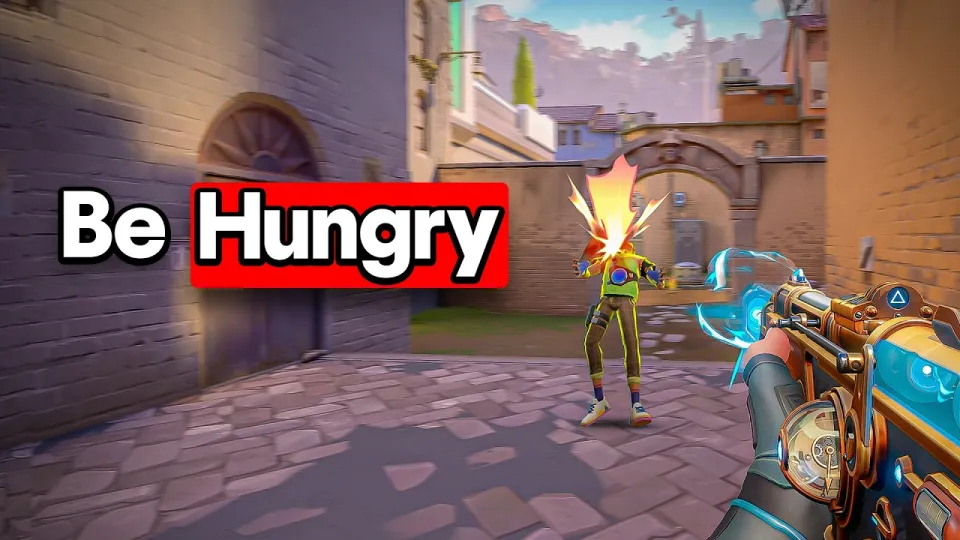
Video: How to Get So Good at Valorant it Feels Like Smurfing
You can order the same kind of articles for your own video to boost it on YouTube and Google. Just message the Telegram bot @sat_sit_bot. The bot writes and publishes the articles itself (with your YouTube video embedded) on popular topical websites (no ads). Your first 50 articles are free.
· based on the channel Konpeki
Key takeaways
- Konpeki's core idea: react to the enemy and stay unpredictable instead of running a fixed script every round.
- Smurf-level play is built from fundamentals — movement, crosshair placement, peeking and utility — not from one secret trick.
- Aim alone does not carry rounds: positioning and timing decide most duels in Valorant.
- Movement accuracy can be trained in the Range, including lowering the movement error multiplier to 0.5 for focused reps.
- The Immortal Roadmap Program at roadmap.gg/v/lUfrMRb74SE promises 5 divisions in 10 weeks with a free call to check fit.
Smurfing in Valorant is not a cheat code — it is what happens when fundamentals are so automated that every duel looks effortless. The short answer: you get there by reacting to what the enemy actually does instead of running a scripted plan, and by staying unpredictable in movement, timing and positioning. Coach Konpeki breaks this down in the video "How to Get So Good at Valorant it Feels Like Smurfing", and his Immortal Roadmap Program — 5 divisions in 10 weeks, guaranteed, with a free call to check fit — is built on the same logic.
Why smurf-level Valorant is a fundamentals problem
A smurf does not win because of a secret agent pick or a lucky lobby; they win because the basics are so tight that mistakes get punished instantly. In Valorant, the gap between Diamond and Immortal is rarely raw flick speed — it is the number of small errors per round. Bad peeks, late reactions, predictable rotations and wasted utility all compound, and a player who removes even half of them suddenly looks two ranks better than their badge.
The practical framing is simple: every round you should be able to name what you are reacting to. If you cannot, you are playing on autopilot, and autopilot is exactly what a smurf exploits.
Step 1: Build movement you never have to think about
Movement is the foundation that everything else sits on, because aim only works from a stable base. If your counter-strafe timing is off, your first bullet leaves the gun while you are still sliding, and no amount of crosshair placement saves the duel.
The drill that gets repeated most often in coaching circles is the Range exercise where you move side to side and fire one shot per direction change. The key detail is that each shot has to land at the moment your movement stops, not while you are still holding A or D — otherwise you are training the wrong habit. A useful variation is turning movement error on and dropping its multiplier to around 0.5, which makes the feedback stricter than a real match and forces cleaner stops.
Once counter-strafing is automatic, you stop losing duels you should win and start winning duels you should lose.
Step 2: Place your crosshair where the enemy will appear
Crosshair placement is the cheapest aim upgrade in Valorant, because it costs nothing and pays on every single engagement. Instead of flicking to heads, you pre-aim the angle at head height and let the enemy walk into your crosshair.
The habits that matter:
- Keep the crosshair at head level while clearing angles, not drifting to the floor or the skybox.
- Aim at the wall edge, not into the open space behind it, so a peeking enemy meets your bullet immediately.
- Adjust height for ramps, boxes and elevated positions before you swing, not after.
- Reset your crosshair after every kill instead of leaving it where the body dropped.
A player with average flicks and great crosshair placement beats a player with great flicks and lazy placement almost every time.
Step 3: Peek on reaction, not on a timer
The single most repeated takeaway from Konpeki's breakdown is to react to the enemy and stay unpredictable. Most players swing on a rhythm — they peek the same angle at the same moment every round, and opponents learn it after two rounds.
Reaction-based peeking means your swing is triggered by information: a sound cue, a teammate's contact, a utility landing, or a known rotation timing. That is what makes a smurf feel impossible to read — they are not faster, they are answering a question the enemy asked.
Practical rules:
- Do not re-peek the same angle the same way twice in a row.
- Change your timing by half a second: sometimes hold, sometimes swing early, sometimes wide.
- Use jiggle peeks to bait utility and wide swings to punish reloads and ability animations.
Step 4: Make your utility do the work for you
Utility is where a mechanically average player can look like a smurf, because abilities buy information and deny space. A Sova recon, a Fade haunt or a simple smoke line can turn a 50/50 duel into a free kill.
The standard is to use utility with a purpose attached to it: every flash should have a named target, every smoke should block a specific angle, and every molly should deny a plant or a common hold. If you cannot say what an ability is for before you throw it, you are just spending cooldowns.
Step 5: Play a plan, not a highlight reel
Several viewers of the video pointed out that the message boils down to keeping it simple and having a plan — the same way any sport works. Valorant rewards the player who knows their job on every round over the player who improvises hero plays.
A workable plan structure:
- Decide your role before the round starts: entry, trade, anchor or lurk.
- Pick one win condition — a site hit, a pick, a retake — and commit to it.
- Trade teammates deliberately instead of dying alone in a 1v3.
- Review one round per match where you had no idea what you were doing, and fix that specific mistake.
Consistency beats brilliance across a ranked session, because ranked is a volume game.
Step 6: Train deliberately instead of grinding mindlessly
Ranked matches are practice for the wrong things when you are autopiloting. Deliberate training means short, focused blocks: ten minutes of counter-strafe drills, ten minutes of crosshair placement on a Deathmatch, ten minutes of utility lineups on your main agent.
Track one metric at a time — first-bullet accuracy, deaths before 30 seconds, or percentage of rounds where you traded a teammate. Improvement you can measure is improvement you can repeat, and that is what separates a player who climbs from a player who is stuck at the same rank for a season.
Step 7: Fix the mindset that keeps you at your rank
The last step is emotional, and it is the one most players skip. Blaming teammates, tilting after two lost rounds and forcing hero plays are all habits that erase the fundamentals you just built.
Treat every death as information: what did the enemy know, what did you give away, what would a smurf have done differently? Players who ask that question after each round improve faster than players who queue another match to forget the last one.
Common questions from players trying to rank up
A few themes come up constantly around this topic. Console players ask whether coaching applies to them — it does, since positioning, crosshair placement and utility logic transfer directly, only the input method changes. Beginners ask what to do first, and the honest answer is movement and crosshair placement before anything flashy. Others ask about age requirements and program logistics, which is exactly what the free call is for. And a recurring note from players who already climbed is that the advice sounds simple — because it is, and simple things executed consistently are what make a player look like a smurf.
Useful links
- Immortal Roadmap Program (5 divisions in 10 weeks, guaranteed): https://roadmap.gg/v/lUfrMRb74SE
- Free coaching resources and office hours on Discord: https://www.discord.gg/UnRETVmRpV
- Twitch: https://www.twitch.tv/konpekichan
- Twitter: https://twitter.com/coachpeki
- TikTok: https://www.tiktok.com/@coachpeki
The bottom line on looking like a smurf in Valorant
Smurf-level Valorant comes from automating the boring parts — movement, crosshair placement, utility and trading — so your attention is free to react to what the enemy is actually doing. Konpeki's breakdown makes the point that unpredictability and reaction beat memorized routines, and the same logic runs through his Immortal Roadmap Program. If you want a structured path instead of another season of guessing, book a free call and reserve a spot in the Immortal Roadmap Program — 5 divisions in 10 weeks, guaranteed. Pick one step from this list, train it for a week, and you will already feel the difference in your next ranked session.
Source: How to Get So Good at Valorant it Feels Like Smurfing · Markdown version
Questions & answers
What actually makes a player look like a smurf in Valorant?
It is the sum of fundamentals rather than one trick: clean counter-strafing, head-level crosshair placement, reaction-based peeking and utility that is thrown with a purpose. When those are automated, you stop making the small errors that lower-ranked players make every round, and your gameplay looks effortless.
How should I practice counter-strafing in the Range?
Move side to side and fire one shot at each direction change, making sure the bullet leaves the gun only when your movement has stopped. Do not fire while still holding A or D, because that trains the wrong timing. Turning movement error on and lowering its multiplier to roughly 0.5 makes the feedback stricter than a real match.
Does this coaching apply to console players on PS5 or Xbox?
Yes. Positioning, crosshair placement, utility usage and round planning transfer directly to console, since only the input method differs. The main adjustment is that movement and aim drills need to be adapted to controller sensitivity and aim assist behavior.
Is there an age requirement for the Immortal Roadmap Program?
Age and eligibility questions are exactly what the free introductory call is for, since the program is a paid coaching track with limited slots. You can check fit and logistics through the link in the description before committing to anything.