Valorant, What the Rawzu Phoenix Clips Teach About Movement and Aim
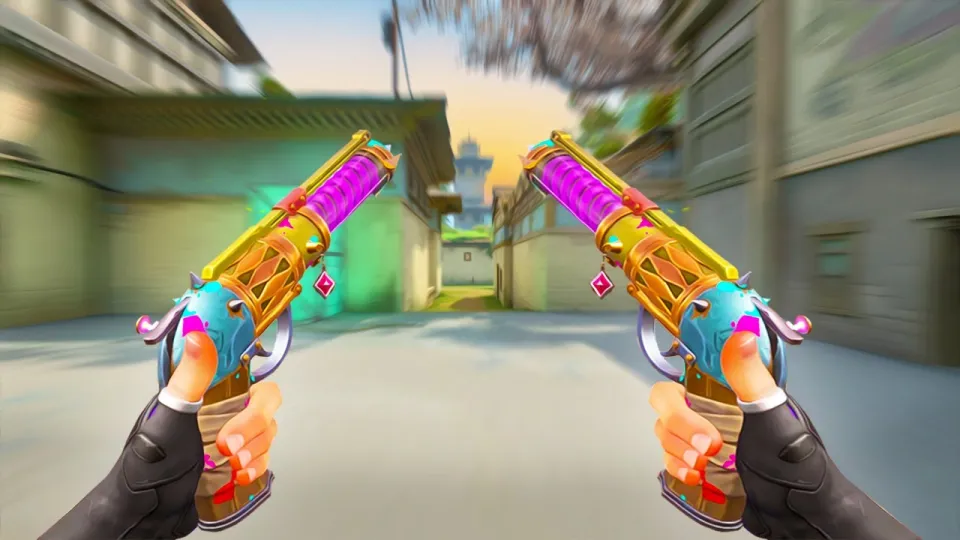
Video: 20 Minutes of Satisfying Valorant Clips
You can order the same kind of articles for your own video to boost it on YouTube and Google. Just message the Telegram bot @sat_sit_bot. The bot writes and publishes the articles itself (with your YouTube video embedded) on popular topical websites (no ads). Your first 50 articles are free.
· based on the channel Rawzu
Key takeaways
- Rawzu plays Phoenix, an offensive duelist whose Blaze, Curveball, Hot Hands and Run it Back kit rewards aggressive entries.
- His listed settings: 400 DPI, 0.625 in-game sensitivity, 1440x1080 resolution, crosshair 1-6-2-2.
- Hardware: Lamzu Maya X mouse, Zowie H-SR-SE 2 Blue mousepad, Zowie XL2566K 360Hz monitor.
- The 20-minute highlight compilation leans on satisfying one-taps, fast peeks and clean ability combos across Lotus and Icebox.
- Viewer comments repeatedly praise movement speed, supportive teammates and specific clutch rounds rather than raw stats.
Valorant is a 5v5 tactical shooter where two teams of agents fight over a spike, and the duelist Phoenix turns that fight into a close-range brawl with fire walls, flashes and a self-revive ultimate. The Rawzu compilation "20 Minutes of Satisfying Valorant Clips" is a useful case study because it shows how one Phoenix main converts a fixed set of settings and habits into repeatable highlight plays. If you want to watch the same style live, Rawzu streams daily at kick.com/rawzu, where the ranked grind behind these clips actually happens.
What Phoenix Actually Does in Valorant
Phoenix is a duelist built to take space and win isolated fights, and his kit is designed around that job. Blaze throws a wall of fire that blocks vision and damages anyone standing in it, which lets him cross open ground or cut a site in half. Curveball is a curved flash that blinds enemies even when they are tucked behind corners, so it works as an entry tool rather than a simple line-of-sight check. Hot Hands throws a fireball that creates a damaging zone and heals Phoenix if he stands in it, and Run it Back lets him mark his position, die, and respawn at the mark with full health. In combination, those four abilities make him durable enough to lead a push and aggressive enough to punish anyone who gives up ground. The clips in the compilation lean on exactly this: wall to split a choke, flash to blind the anchor, then a fast swing into the site.
Rawzu's Settings, Crosshair and Why They Matter
Settings are not talent, but they do remove friction, and Rawzu publishes his full setup. He plays at 400 DPI with an in-game sensitivity of 0.625, which works out to a low effective sensitivity that favors precise micro-adjustments over wide flicks. His resolution is 1440x1080, a stretched aspect ratio that widens character models on screen and makes heads easier to track at range. The crosshair is listed as 1-6-2-2, a compact style that keeps the center of the screen readable during fast movement. On the hardware side he uses a Lamzu Maya X mouse, a Zowie H-SR-SE 2 Blue mousepad and a Zowie XL2566K 360Hz monitor. The takeaway is not that you need the same gear, but that a low sensitivity plus a stretched resolution plus a small crosshair is a coherent package: it trades flashy 180-degree turns for consistent first-bullet accuracy.
Movement, Peeking and the Satisfying Clip Formula
Most of what makes a Valorant highlight satisfying is movement, not luck, and the compilation is built on that. A Phoenix entry usually follows a short sequence: place Blaze to block the most common angle, throw Curveball so it pops just before you swing, and then peek wide enough that you clear the corner in one motion instead of stopping in the doorway. Viewers in the comments keep coming back to the same detail, noting how hard it is to keep up with the movement speed and how the aim holds up while strafing. That is the real skill being shown. Counter-strafing, where you tap the opposite movement key to stop instantly before shooting, is what turns a fast peek into an accurate one. The clips also show how much value Phoenix gets from Hot Hands as a heal after a trade, letting him stay on site instead of retreating to a safe corner.
Common Questions Viewers Ask About These Clips
Comments under the video mix genuine curiosity with jokes, and both point at real topics. A recurring question is simply what sensitivity and DPI are being used, which is why the numbers above matter. Another thread of comments is about game sense, with one viewer joking that in their own matches the enemies actually shoot back and rotate properly, which is a fair reminder that highlight reels compress a lot of failed attempts. Several comments focus on individual rounds, praising a one-tap on a specific opponent or a clean multi-kill, and others highlight how supportive the teammates sound on comms. The honest reading is that the clips are the best moments from many hours of ranked play, not a typical match. Finally, a few viewers ask about peripherals and about the philosophy behind treating the Vandal the way Rawzu does, which is a legitimate topic: burst-fire discipline at range and full-auto only in close quarters is a habit worth copying.
Maps, Economy and the Details Behind the Highlights
A highlight only looks clean when the economy supports it, and Valorant rounds are won or lost on buy decisions. One comment points out a round where a player has a Vandal, full shields and abilities available on round two, which is only possible after a pistol-round win and a disciplined buy. On maps like Lotus and Icebox, Phoenix's Blaze is especially strong because both have narrow chokes and vertical angles where a wall can cut off a defender's rotation entirely. Lotus in particular rewards a duelist who can wall off a door, flash over it and take a site with three lanes of approach, while Icebox's tight mid and tube areas make Curveball hard to dodge. Watching where the wall goes and when the flash is thrown teaches more than watching the final kill, because those two decisions create the space that makes the shot easy.
How to Practice This Style in Your Own Ranked Games
Copying a highlight reel works only if you turn it into drills, so here is a practical order of operations. First, lock in a sensitivity you can control and stop changing it every week; a low effective sensitivity with a stretched resolution is a proven combination. Second, practice counter-strafing in the range until stopping and shooting feels automatic, since every fast peek in the compilation depends on it. Third, learn one Phoenix entry per map: a wall placement and a flash timing you can repeat without thinking. Fourth, use Hot Hands proactively for healing and zone control rather than saving it for a desperate fight. Fifth, review your own deaths the way you would review a highlight, asking whether the peek was too wide or the flash came too late. None of this requires Rawzu's exact mouse or monitor, only the same discipline about stopping before you shoot.
Useful Links
- Daily live streams: https://kick.com/rawzu
- Original music on Spotify: https://open.spotify.com/artist/6DbATPR1PTNMx7U918bg1Q
- Community Discord: https://discord.gg/axnFwyvxp3
Final Take
The "20 Minutes of Satisfying Valorant Clips" compilation from the channel Rawzu is less a montage of luck and more a demonstration of what a disciplined Phoenix looks like: low sensitivity, stretched resolution, deliberate movement and abilities used to create the fight rather than react to it. The settings are published, the agent is one of the most straightforward duelists in the game, and the habits shown are transferable to any rank. If you want to see the same approach applied live instead of in edited highlights, watch Rawzu daily at kick.com/rawzu and compare your own decision-making round by round.
Source: 20 Minutes of Satisfying Valorant Clips · Markdown version
Questions & answers
What sensitivity and DPI does Rawzu use in Valorant?
Rawzu lists 400 DPI with an in-game sensitivity of 0.625, which is a low effective sensitivity aimed at precise micro-adjustments. He pairs it with a 1440x1080 stretched resolution and a 1-6-2-2 crosshair. Copying the exact numbers is optional, but the low-sensitivity, stretched-resolution combination is a consistent choice for players who value first-bullet accuracy.
Why do the enemies in these clips seem easier to kill than in my matches?
Highlight compilations show the successful attempts out of many hours of ranked play, so failed peeks and lost duels are simply not included. Opponents in any given clip may also be caught mid-rotation or after a flash, which is exactly the advantage Phoenix's kit is designed to create. Treat the clips as a demonstration of good entry habits rather than a representative match.
Is Phoenix a good agent for learning movement and aggressive peeking?
Yes, Phoenix is one of the most forgiving duelists for practicing entries because Blaze blocks vision, Curveball blinds around corners and Hot Hands heals him after a trade. Run it Back also lets him take a risky first contact without losing the round outright. That combination makes him a practical pick for players who want to learn how to take space.
Do I need the same mouse and monitor to play like this?
No. Rawzu uses a Lamzu Maya X mouse, a Zowie H-SR-SE 2 Blue mousepad and a Zowie XL2566K 360Hz monitor, but those are comfort items rather than requirements. What actually transfers is the low sensitivity, the stretched resolution and the habit of counter-strafing before every shot. A stable setup you never change will help you more than expensive hardware.